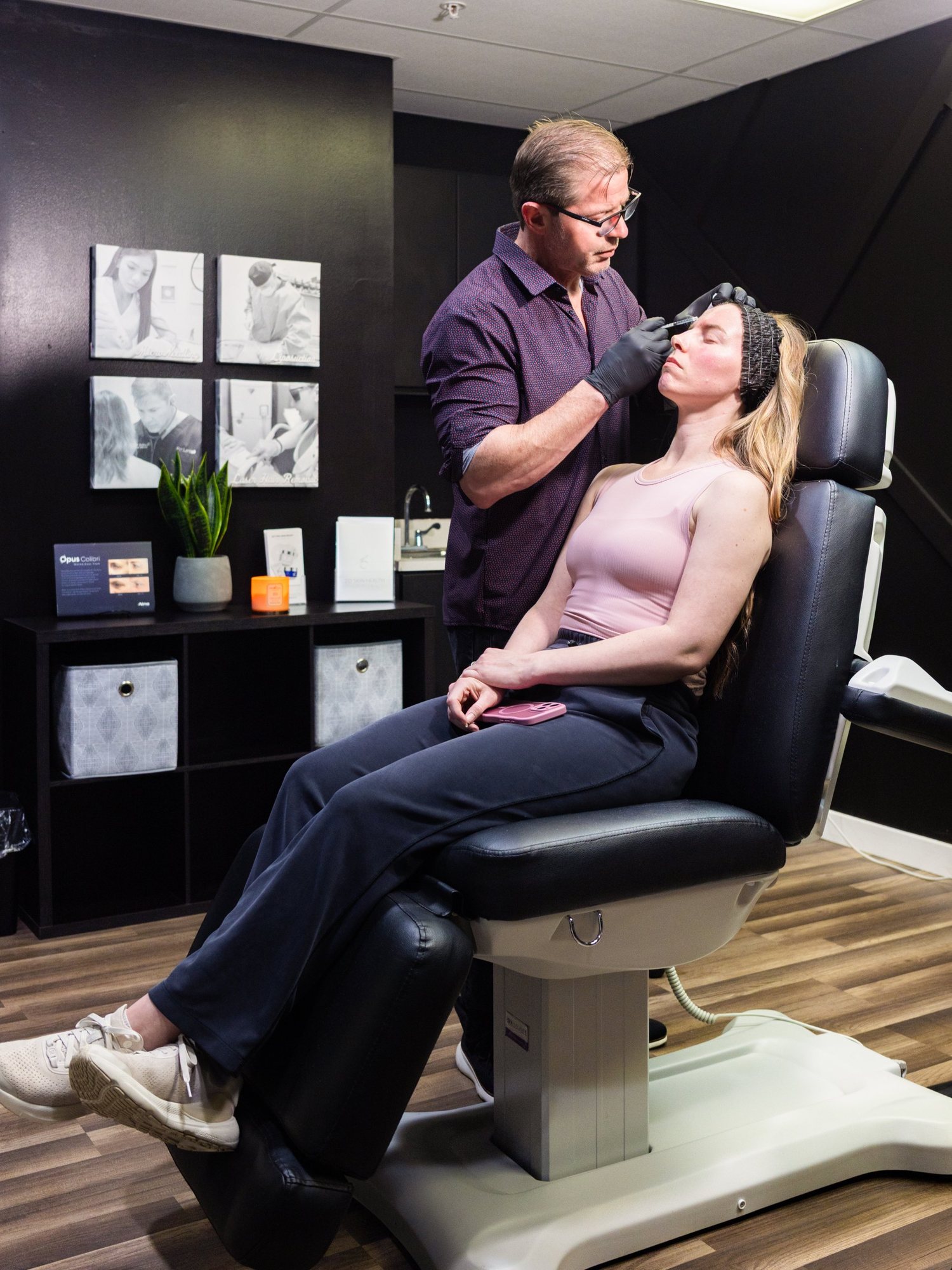
The Best Aesthetic Result May Be the One Nobody Notices
For years, aesthetic medicine was often associated with obvious change.
- Bigger lips.
- Higher cheekbones.
- Completely smooth foreheads.
- Dramatically sculpted jawlines.
- More volume.
- More correction.
- More transformation.
But aesthetic medicine is changing.
In 2026, many patients are asking for something very different.
They do not necessarily want to look younger at any cost.
They want to look healthier.
- More rested.
- More refreshed.
- More balanced.
And most importantly, they still want to look like themselves.
This shift toward subtle, natural appearing enhancement has become increasingly visible across aesthetic medicine. The American Society of Plastic Surgeons has described a movement toward understated treatments that emphasize natural appearance, skin health, proportion, and refinement rather than obvious cosmetic transformation. [1]
At the same time, scientific thinking about facial rejuvenation has become more sophisticated.
Aging is no longer viewed as simply a collection of wrinkles that need to be erased.
The face ages through changes in skin quality, collagen, fat compartments, muscle activity, ligaments, bone structure, and tissue position. Modern aesthetic treatment increasingly considers these changes together rather than attempting to correct every concern with a single procedure.
The result is a different philosophy.
Do not change the face simply because we can. Understand the face first, and then decide what actually needs treatment.
The Era of Looking “Done” Is Losing Its Appeal
Aesthetic trends have changed considerably over the past decade.
Social media helped popularize highly recognizable aesthetic features including dramatic lip volume, sharply defined jawlines, exaggerated cheek projection, and extremely smooth facial movement.
For some patients, these treatments produced exactly the appearance they wanted.
But trends evolve.
Many patients today are becoming increasingly concerned about looking overfilled, overtreated, or simply unlike themselves.
The new conversation is less about transformation and more about refinement.
The American Society of Plastic Surgeons has described this movement as a form of “quiet beauty,” in which patients increasingly seek treatments that enhance appearance without advertising that a procedure has been performed. [1]
This does not mean aesthetic medicine is becoming less effective.
It means the definition of a successful result is changing.
Instead of asking:
“How much can we change?”
The better question may be:
“How much improvement can we achieve while preserving what already makes this face unique?”
Natural Does Not Mean Doing Nothing
There is an important distinction here.
A natural looking result does not necessarily mean a minimal treatment.
And it certainly does not mean ignoring meaningful signs of aging.
Someone may have substantial sun damage, facial volume loss, skin laxity, pigmentation, textural changes, or wrinkles.
Treating those concerns may require several different approaches.
The difference lies in the goal.
The objective is not to create a generic version of youth.
The objective is to improve the individual’s appearance while preserving identity, expression, proportion, and facial character.
A 2026 international consensus on natural outcomes with hyaluronic acid fillers emphasized that naturalness extends beyond what the face looks like in a photograph. Experts proposed evaluating how the result looks, feels, moves, and integrates with facial expression. [2]
That is a much more sophisticated definition of a natural result.
A face is not a still photograph.
- It smiles.
- It speaks.
- It laughs.
- It moves.
Good aesthetic medicine should respect that.
Skin Quality Has Moved to Center Stage
One of the biggest changes in modern aesthetic medicine is increasing attention to skin quality.
For years, the aesthetic conversation was dominated by wrinkles and volume.
See a line?
Fill it.
See volume loss?
Add volume.
But youthful appearance depends on much more than facial fullness.
Healthy looking skin has relatively even pigmentation, smooth texture, appropriate hydration, elasticity, firmness, and luminosity.
A 2025 expert consensus on skin quality described four major perceptual categories: skin tone evenness, skin surface evenness, skin firmness, and skin glow. [3]
This helps explain why someone can have adequate facial volume and still feel that their skin looks older.
- Pigmentation matters.
- Texture matters.
- Pore appearance matters.
- Collagen matters.
- Redness matters.
- Sun damage matters.
- Skin laxity matters.
And none of those problems can necessarily be solved by simply adding more filler.
More Filler Is Not Always the Answer
Dermal fillers remain extremely valuable tools.
Modern fillers can restore appropriate volume, improve contours, support facial structures, and help address specific changes associated with aging.
But the philosophy surrounding filler use is becoming more thoughtful.
Facial aging is complex. It involves changes in skin, fat compartments, supporting structures, and bone.
Simply adding volume everywhere can eventually distort natural proportions.
Contemporary literature increasingly emphasizes anatomy based assessment, careful product selection, appropriate injection planes, and individualized treatment strategies. [4]
In some patients, a small amount of carefully placed filler can produce an elegant improvement.
In another patient, filler may not be the primary treatment at all.
Perhaps the bigger issue is skin laxity.
Or pigmentation.
Or texture.
Or dynamic wrinkles.
Or photodamage.
Or significant tissue descent that would be better addressed through a different modality.
Good aesthetic medicine requires knowing not only how to perform a treatment, but also when not to perform it.
Facial Balance Matters More Than Individual Features
A face should not be evaluated as a collection of isolated parts.
Lips do not exist independently from the chin.
The chin does not exist independently from the jawline.
The cheeks influence how we perceive the lower face.
The temples affect the overall contour of the upper face.
The forehead, brows, eyes, cheeks, nose, lips, chin, and jaw all contribute to the way the face is perceived as a whole.
This is why modern facial assessment increasingly emphasizes proportion, shape, symmetry, expression, and skin quality.
A 2025 expert panel evaluating contemporary facial assessment concluded that modern aesthetic assessment should move away from rigid universal beauty standards and toward more individualized, culturally sensitive evaluation. [5]
That is important.
There is no single perfect face.
And there should not be one aesthetic formula applied to every patient.
The objective is harmony, not conformity.
Your Face Should Still Look Like Your Face
One of the dangers of trend driven aesthetic medicine is that patients can gradually begin looking more like the trend and less like themselves.
The same lip shape.
The same cheek projection.
The same jawline.
The same eyebrow position.
But human faces are supposed to be different.
Those differences are part of identity.
Natural aesthetic medicine begins by identifying the features worth preserving.
A strong jawline may be characteristic of one person’s face.
Soft cheeks may define another.
Someone may have expressive eyes, prominent cheekbones, a distinctive nose, or naturally full lips.
The treatment plan should work with those features rather than attempting to replace them with someone else’s proportions.
The goal should not be to create a different person.
It should be to create a refreshed version of the person already sitting in the treatment chair.
Expression Matters
Neuromodulators such as Botox and similar products remain among the most useful treatments in aesthetic medicine.
They can soften dynamic wrinkles caused by repeated muscular contraction.
But the philosophy surrounding these treatments is also evolving.
The goal does not always need to be eliminating every visible line or every degree of movement.
Expression is part of human communication.
Our eyebrows move when we are surprised.
Our eyes change when we smile.
Our forehead participates in expression.
A thoughtful neuromodulator treatment can soften unwanted lines while maintaining an appropriate degree of natural movement when that aligns with the patient’s goals.
The amount and placement should therefore be individualized.
Different people have different facial anatomy, muscle strength, brow position, expressions, and treatment goals.
A standardized number of units applied identically to every face does not reflect those differences.
Skin Rejuvenation Is Becoming Just as Important as Injectables
As attention shifts toward skin quality, procedures that improve the skin itself are becoming increasingly important components of aesthetic treatment planning.
Depending on the patient’s needs, this may include technologies and procedures designed to address:
- Fine lines
- Uneven pigmentation
- Sun damage
- Rough texture
- Acne scarring
- Enlarged pores
- Redness
- Collagen loss
- Skin laxity
- Overall skin quality
Laser resurfacing, fractional technologies, microneedling, radiofrequency based procedures, chemical treatments, and other modalities can each address different aspects of skin aging.
These procedures do something filler cannot.
They treat the skin.
This distinction is important.
If the problem is primarily texture, adding volume may not solve it.
If the problem is pigmentation, filling the face will not remove the pigment.
If the problem is collagen loss and surface aging, a skin focused strategy may provide a more appropriate solution.
Modern aesthetic planning begins by identifying the actual problem before selecting the treatment.
Combination Treatment Is Replacing the “One Procedure Fix”
Because facial aging occurs at multiple levels, one procedure rarely addresses everything.
Consider someone with forehead lines, facial volume loss, sun damage, uneven pigmentation, and declining skin firmness.
Filler alone cannot address all of those concerns.
Neither can a laser.
Neither can a neuromodulator.
A thoughtful plan might use different treatments for different problems.
- Neuromodulators may address excessive dynamic muscle activity.
- Conservative filler may restore strategically important volume.
- Laser or energy based treatments may improve pigmentation and texture.
- Microneedling or other collagen focused procedures may help improve skin quality.
- Medical grade skincare and sun protection may help maintain the results.
The exact combination should be individualized.
The point is not to perform more procedures.
The point is to use the right procedure for the right problem.
The Rise of Regenerative Aesthetics
Another major conversation in 2026 involves regenerative aesthetics.
Rather than simply filling space or temporarily changing facial contours, regenerative approaches aim to influence tissue quality, collagen production, extracellular matrix remodeling, or biological repair processes.
Biostimulatory fillers are one established example.
Products such as poly L lactic acid and calcium hydroxylapatite can stimulate collagen related tissue responses while providing varying degrees of structural or volumizing effect.
Platelet based therapies are also used in aesthetic practice.
Other emerging products are receiving considerable attention.
However, excitement should not be confused with evidence.
A 2026 review of regenerative aesthetic medicine concluded that collagen biostimulators currently have more consistent evidence for sustained tissue remodeling, while several newer biological approaches remain supported by more limited or heterogeneous clinical evidence. [6]
That distinction is important.
“Regenerative” has become a powerful marketing word.
Patients deserve to know which therapies have meaningful clinical evidence and which remain emerging.
Newer is not automatically better.
Prevention Is Becoming Part of the Conversation
Another change in aesthetic medicine is that patients are beginning treatment earlier.
This does not mean everyone in their twenties needs cosmetic procedures.
They do not.
But aesthetic medicine is increasingly incorporating prevention and maintenance.
Daily sunscreen can reduce cumulative ultraviolet damage.
Appropriate skincare can support skin health.
Treating pigmentation earlier may prevent years of accumulating photodamage from becoming more difficult to address.
Maintaining stable weight can help reduce dramatic changes in facial volume.
Avoiding tobacco can help protect skin quality.
Healthy nutrition, sleep, exercise, and metabolic health also contribute to how we age.
The distinction between aesthetic medicine and healthy aging is becoming less rigid.
Good skin is still part of health.
Social Media Should Not Design Your Face
Social media has dramatically changed aesthetic medicine.
Patients have greater access to information than ever before.
That can be positive.
But social media can also create unrealistic expectations.
Filters alter skin texture.
Lighting changes facial contours.
Camera lenses distort facial proportions.
Angles change jawlines.
Editing removes imperfections.
And trends can make one particular feature suddenly appear desirable to millions of people.
The problem is that trends change faster than anatomy.
A treatment that permanently or semi permanently changes someone’s face should not be based solely on what happens to be popular online this month.
A good aesthetic evaluation should separate inspiration from imitation.
Showing a photograph can help communicate what someone likes.
But the treatment plan still needs to respect the patient’s own anatomy.
Individualized Treatment Planning Is the Future
Perhaps the most important change in aesthetic medicine is the move toward individualized planning.
A good evaluation should begin before anyone picks up a syringe or turns on a laser.
- What bothers the patient?
- What does the patient want to preserve?
- What has changed over time?
- How does the face move?
- What is the quality of the skin?
- Where has volume been lost?
- Is there laxity?
- Is pigmentation the dominant concern?
- Is the patient’s expectation realistic?
- What treatments have already been performed?
- What medical conditions or medications could affect safety?
- What amount of downtime is acceptable?
- What does “natural” mean to this particular patient?
These questions matter.
The 2026 international consensus on natural filler outcomes specifically emphasized individualized treatment planning, communication, appropriate product selection, technical competency, and patient specific factors in achieving safe and natural results. [2]
That is the direction modern aesthetic medicine should continue moving.
Treat the person.
Not the trend.
Sometimes the Best Treatment Is Less Treatment
Aesthetic medicine creates an interesting challenge.
When a treatment produces a nice result, it can be tempting to assume that more treatment will produce an even better result.
That is not always true.
There is a point where correction can become overcorrection.
Volume can become excessive.
Facial movement can become unnecessarily restricted.
Proportions can become distorted.
The subtle transition from refreshed to treated can sometimes occur gradually.
This is why conservative, staged treatment can be valuable.
Perform the treatment.
Allow the tissues to settle.
Reassess.
Then decide whether anything else is actually necessary.
You can always consider adding more later.
The ability to recognize when enough is enough is an important aesthetic skill.
Aesthetic Medicine Should Age With You
Aesthetic care should not be planned only around the next appointment.
- Faces continue changing.
- Skin continues aging.
- Bone structure changes.
- Fat compartments change.
- Weight may change.
- Hormones change.
- Lifestyle changes.
Aesthetic priorities change.
A 2025 review addressing long term filler patients emphasized the importance of managing aesthetic treatment across a patient’s lifetime rather than treating each procedure as an isolated event. [7]
That is an important philosophy.
The treatment that makes sense at 35 may not be the treatment that makes sense at 55.
And the treatment that was appropriate five years ago may no longer be the best choice today.
Aesthetic medicine should evolve with the patient.
What Should a Natural Result Look Like?
Ideally, people should notice you, not your procedure.
They may say:
- “You look rested.”
- “Your skin looks great.”
- “You look refreshed.”
- “Did you change something?”
What they should not necessarily be able to identify is exactly what was done.
That is the difference between obvious intervention and subtle rejuvenation.
- Natural results preserve identity.
- They respect anatomy.
- They maintain appropriate expression.
- They improve skin quality.
- They restore rather than exaggerate.
- And they allow the person to remain recognizable as themselves.
That is a much more difficult standard than simply creating dramatic change.
It also represents a more sophisticated form of aesthetic medicine.
The Future of Aesthetics Is Not About Looking Younger at Any Cost
Aging is not a defect.
Faces are supposed to change.
Skin is supposed to change.
The goal of aesthetic medicine should not be pretending that time has stopped.
Instead, it can help people age in a way that feels more consistent with how they see themselves.
For one person, that may mean improving sun damage.
For another, restoring subtle facial volume.
For another, softening expression lines.
Someone else may care primarily about acne scarring, pigmentation, skin laxity, or texture.
There is no universal treatment plan because there is no universal face.
That is exactly the point.
Take an Individualized Approach to Aesthetic Medicine
At Vita Nova AntiAging and Rejuvenation Center, we believe aesthetic medicine should enhance the individual rather than replace what makes that person unique.
The modern approach to rejuvenation is not simply about filling wrinkles or adding volume.
It is about understanding facial anatomy, skin quality, proportion, expression, aging patterns, and the patient’s individual goals.
Sometimes the appropriate treatment may involve a neuromodulator.
Sometimes it may involve carefully selected filler.
Sometimes the priority is laser resurfacing, RF microneedling, RF plasma, another skin rejuvenation procedure, or a combination approach.
And sometimes the right decision is to do less.
The objective is not to make every patient look the same.
It is to create a thoughtful treatment plan that respects the face already there.
In 2026, the new standard in aesthetic medicine is becoming increasingly clear:
- Refreshed, not overdone.
- Balanced, not exaggerated.
- Healthy looking skin, not simply more volume.
- Individualized treatment, not a social media template.
And above all:
You should still look like you.
Related Reading
- Collagen Banking: Can You Invest in Your Skin Before Aging Becomes Visible?
- IPL vs. Laser Treatments: What’s the Difference?
Learn more about aesthetic services at Vita Nova AntiAging and Rejuvenation Center.
References
- American Society of Plastic Surgeons. Quiet Luxury in the World of Plastic Surgery. ASPS. 2026.
- International multidisciplinary consensus panel. See, Touch, Feel, and Express: Achieving Safe and Natural Outcomes With HA Fillers: An International Consensus. Journal of Cosmetic Dermatology. 2026.
- Goldie K, et al. How to Treat Skin Quality: A Consensus Based Treatment Algorithm and Expert Guidance. Journal of Cosmetic Dermatology. 2025.
- DeVries A, et al. Injectable Fillers and Collagen Stimulators for Facial Aesthetics: Products, Indications, Techniques, and Complications. Journal of Craniofacial Surgery. 2026.
- Current Standards of Facial Assessment and Opportunities for Improvement. Dermatologic Surgery. 2025.
- Regeneration in Aesthetic Medicine: Mechanisms, Evidence, and Clinical Boundaries. Journal of Cosmetic Dermatology. 2026.
- Mess S, et al. Managing Injectable Fillers in the Long Term Aesthetic Patient: Contemporary Approaches and Surgical Considerations. Plastic and Reconstructive Surgery. 2025.
- Wiegmann AL, Chadab TM, Rohrich RJ. Rethinking Filler Strategy for the Aging Face. Journal of Plastic, Reconstructive and Aesthetic Surgery. 2025;110:115 to 122.
- Barone M, De Bernardis R, Persichetti P. Aesthetic Medicine Across Generations: Evolving Trends and Influences. Aesthetic Plastic Surgery. 2025;49:3274 to 3276.
- Dayan S, Fabi S. Neuroaesthetics: Evolutionary Thinking in Facial Aesthetic Medicine. Journal of Cosmetic Dermatology. 2026;25:e70885.
Medical Disclaimer
This article is intended for general educational purposes and should not be considered individualized medical advice or a recommendation for any specific cosmetic procedure. Aesthetic treatments have potential benefits, limitations, contraindications, and risks. Appropriate treatment depends on facial anatomy, skin type, medical history, medications, previous procedures, individual goals, and other clinical factors. An evaluation with an appropriately trained and licensed healthcare professional is necessary to determine whether a particular aesthetic treatment is appropriate.