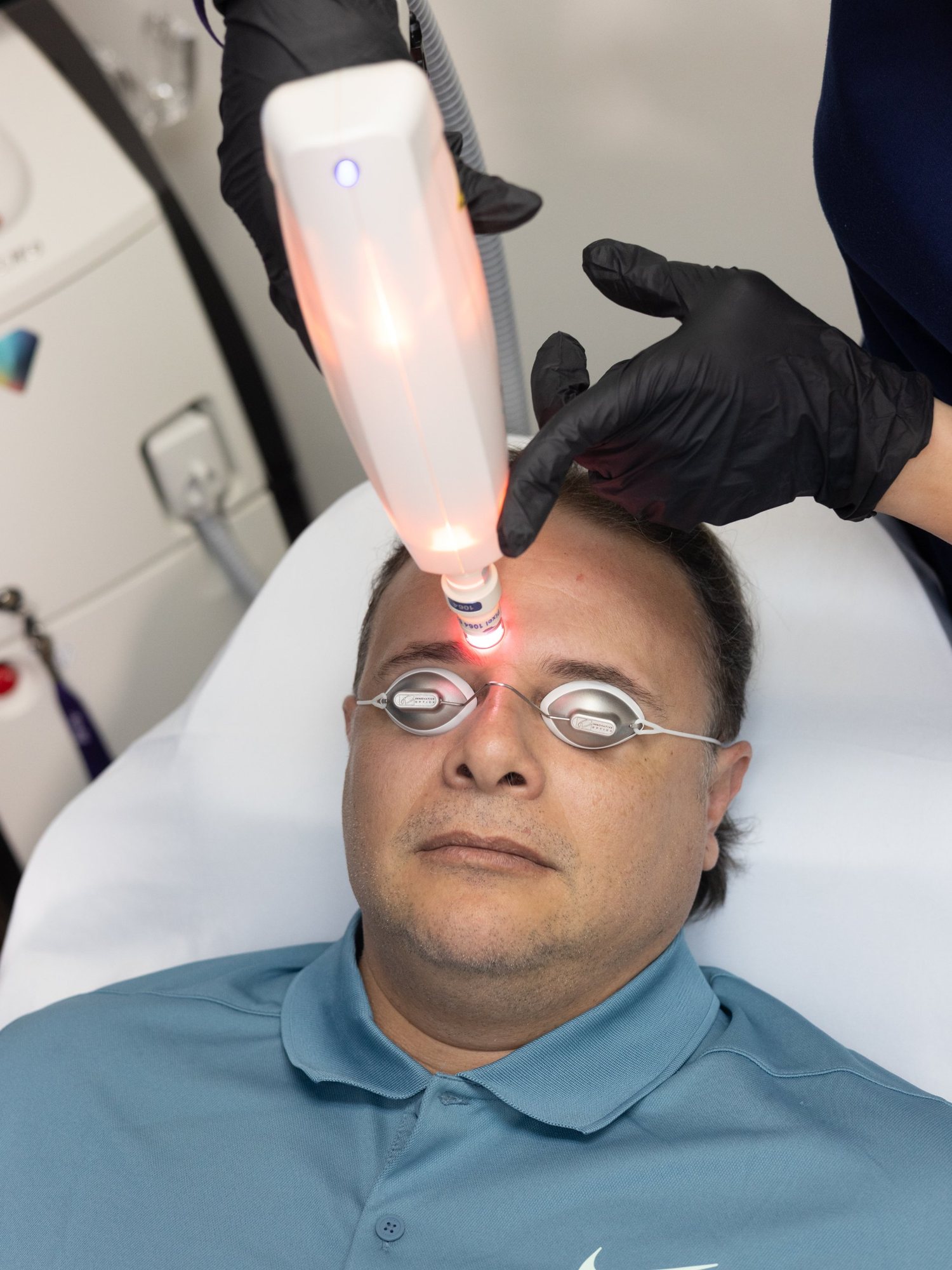
What If You Started Caring About Collagen Before You Could See It Disappearing?
Most people begin thinking about skin aging after they notice something has changed.
- Fine lines appear around the eyes.
- The skin does not feel quite as firm.
- Pores seem more noticeable.
- The jawline begins to look softer.
- Skin texture becomes rougher.
- Sun damage becomes increasingly visible.
- Makeup does not sit on the skin the way it used to.
At that point, people begin asking what can be done.
But modern aesthetic medicine is increasingly asking a different question:
What if we started supporting skin quality before those changes became significant?
That idea has helped popularize the term collagen banking.
The concept sounds simple. Stimulate and protect collagen earlier in adulthood so that the skin enters later decades in better condition.
There is some reasonable science behind the philosophy.
But the term can also be misleading.
You cannot literally deposit collagen into a biological savings account at age 35 and withdraw it at age 65.
- Skin continues to age.
- Collagen continues to remodel.
- Sun exposure continues to matter.
- Hormones change.
- Genetics matter.
- Lifestyle matters.
So collagen banking should not be viewed as a way to stop aging.
A better way to think about it is this:
Protect the collagen you have, reduce unnecessary collagen damage, and use appropriate treatments to stimulate remodeling when it makes sense.
That is a much more realistic approach to preventive aesthetics.
What Is Collagen?
Collagen is one of the major structural proteins in the human body.
It is found in skin, tendons, ligaments, cartilage, bone, blood vessels, and many other tissues.
Within the skin, collagen is an essential component of the dermal extracellular matrix.
Think of the dermis as the structural support system beneath the skin’s surface.
Collagen contributes strength and firmness.
Elastin contributes elasticity.
Other components of the extracellular matrix help maintain hydration, structure, and communication between cells.
Healthy youthful skin contains an organized network of these structural proteins.
But that network does not remain unchanged throughout life.
What Happens to Collagen as We Age?
Skin aging occurs through a combination of intrinsic aging and extrinsic aging.
Intrinsic aging refers to biological changes that occur naturally over time.
Cellular activity changes.
Collagen production and remodeling change.
The extracellular matrix becomes altered.
Skin becomes thinner and less resilient.
But chronological aging is only part of the story.
Extrinsic factors can accelerate these changes.
The most important is ultraviolet radiation.
Repeated exposure to ultraviolet light contributes to photoaging, which can lead to collagen fragmentation, abnormal elastin accumulation, pigmentation changes, wrinkles, rough texture, and loss of elasticity.
Ultraviolet exposure can also increase the activity of enzymes known as matrix metalloproteinases.
These enzymes participate in breaking down components of the extracellular matrix, including collagen.
Research examining photoaging consistently identifies ultraviolet exposure as a major driver of collagen damage and remodeling.
This is why protecting collagen begins with something far less glamorous than a laser.
It begins with protecting your skin from the sun.
Collagen Loss Is Not Just About Wrinkles
When people hear the word collagen, they usually think about wrinkles.
But collagen changes can affect much more than visible lines.
As the dermal support structure changes, skin may gradually become:
- Thinner
- Less firm
- Less elastic
- More fragile
- Rougher in texture
- More prone to creasing
- Less able to maintain a smooth surface
This is why simply filling individual wrinkles does not necessarily address overall skin aging.
A wrinkle may be one visible manifestation of a larger structural process.
Modern aesthetic medicine increasingly focuses on skin quality, not simply individual lines.
That means asking:
- How healthy does the skin look?
- How does it feel?
- How even is the texture?
- How firm is it?
- How much photodamage is present?
- How well does it reflect light?
- How much elasticity remains?
Those questions lead to very different treatment strategies than simply chasing every wrinkle with a syringe.
What Does “Collagen Banking” Actually Mean?
Collagen banking is not a formal medical diagnosis or standardized treatment protocol.
It is an aesthetic concept.
The basic idea is to begin supporting collagen earlier rather than waiting until substantial skin aging has already occurred.
That might involve three broad strategies.
First, protect existing collagen from unnecessary damage.
Second, create lifestyle conditions that support normal skin biology.
Third, when appropriate, use treatments that stimulate controlled tissue remodeling and new collagen formation.
The analogy to financial investing is imperfect, but useful.
You cannot stop yourself from getting older.
But just as long term financial planning may be easier when started earlier, maintaining skin quality may be easier when you are not trying to correct decades of accumulated photodamage all at once.
The goal is not to freeze your face at a particular age.
The goal is to help your skin age as well as reasonably possible.
Energy Based Treatments Work by Creating a Controlled Stimulus
One of the fascinating things about skin is its ability to repair itself.
Many modern rejuvenation procedures intentionally take advantage of this process.
Instead of simply placing something underneath the skin, energy based treatments can create carefully controlled zones of thermal or physical injury.
The body responds through a wound healing and remodeling process.
Depending on the technology, this can involve fibroblast activity, collagen remodeling, new collagen formation, elastin changes, and alterations in the extracellular matrix.
This is why the word remodeling is so important.
We are not simply adding collagen from the outside.
We are attempting to stimulate the skin’s own repair mechanisms.
Fractional Laser Resurfacing and Collagen
Fractional laser technology represented an important advancement in skin rejuvenation.
Instead of treating the entire skin surface uniformly, fractional devices create microscopic treatment zones while leaving surrounding tissue relatively intact.
Those microscopic treatment zones initiate a repair response.
Different fractional lasers work at different wavelengths, depths, and levels of intensity.
Broadly, they can be divided into nonablative and ablative technologies.
Nonablative fractional lasers create controlled thermal injury while largely preserving the skin surface.
Ablative fractional lasers create microscopic columns of ablation extending into the skin.
Fractional ablative technologies such as fractional carbon dioxide laser resurfacing can produce more substantial remodeling but typically involve greater downtime and recovery.
Histologic studies demonstrate that fractional and other laser technologies produce distinct patterns of controlled tissue injury that can lead to dermal remodeling. [1]
Reviews examining therapies for aging and thinning skin have also found evidence that laser based treatments can stimulate neocollagenesis. [2]
The appropriate treatment depends on skin type, degree of photodamage, desired improvement, tolerance for downtime, medical history, and risk of pigmentation changes or other complications.
More aggressive treatment is not automatically better treatment.
Radiofrequency Microneedling Takes a Different Approach
Radiofrequency microneedling combines microneedles with radiofrequency energy.
The needles allow energy to be delivered into selected depths within the skin.
This creates controlled thermal zones in the dermis while limiting the amount of thermal injury at the skin surface, depending on the device and settings.
The resulting healing response can stimulate dermal remodeling.
Radiofrequency microneedling is commonly used for concerns such as skin texture, acne scarring, wrinkles, and skin laxity.
A 2025 scoping review found RF microneedling to be a versatile treatment for facial rejuvenation across multiple anatomical areas and described evidence of collagen synthesis and skin repair. [3]
A subsequent systematic review evaluating studies published through 2025 reported consistent improvements in skin texture and tightening with predominantly mild and temporary adverse effects in the included studies. [4]
This makes RF microneedling particularly interesting for patients whose primary goal is improving skin quality rather than changing facial volume.
Radiofrequency Does Not Always Require Needles
Radiofrequency energy can also be delivered without microneedles.
Different technologies use different configurations to deliver controlled heat into dermal or subdermal tissue.
The biological concept is similar.
Controlled heating can produce collagen contraction and initiate wound healing pathways that contribute to neocollagenesis and tissue remodeling.
Modern energy based platforms may use monopolar radiofrequency, bipolar radiofrequency, fractional radiofrequency, microneedle assisted radiofrequency, ultrasound, plasma based technologies, or combinations of different forms of energy.
A 2025 review of energy based skin tightening technologies described lasers, ultrasound, radiofrequency, and plasma based systems as approaches that can influence collagen contraction, neocollagenesis, and neoelastinogenesis. [5]
But these technologies are not interchangeable.
Different devices reach different depths.
They produce different tissue effects.
They have different risk profiles.
And they are appropriate for different patients.
This is why the name of the technology matters less than choosing the right technology for the actual problem.
Collagen Remodeling Takes Time
One of the biggest differences between collagen stimulating procedures and some injectable treatments is the timeline.
If filler is placed into a cheek, some change may be visible immediately.
Collagen remodeling is different.
The treatment creates the stimulus.
Then biology has to respond.
Inflammation and wound healing occur.
Fibroblasts participate in tissue repair.
Collagen is produced and reorganized.
The extracellular matrix remodels.
These processes take time.
That means improvements from collagen stimulating treatments may continue developing over weeks or months.
This is also why performing procedures too frequently is not necessarily better.
The skin needs time to respond.
Good treatment planning respects biology rather than constantly chasing immediate change.
Is Earlier Treatment Better?
This is where the collagen banking concept becomes more nuanced.
There is no universally established age when someone should begin energy based aesthetic treatments.
A 28 year old who has excellent skin, practices consistent sun protection, and has minimal photodamage does not automatically need laser or radiofrequency treatment simply because “collagen starts declining.”
Preventive aesthetics should not create unnecessary procedures.
Instead, treatment should be based on what the skin actually needs.
Someone with substantial sun exposure and early textural changes may reasonably benefit from intervention earlier than someone of the same age with excellent skin quality.
A person with acne scarring may have another reason for treatment entirely.
Another patient may not need an energy based procedure at all.
The goal is not to start procedures as early as possible.
The goal is to intervene appropriately.
Sun Protection May Be Your Most Important Collagen Strategy
If you are interested in preserving skin quality, start with ultraviolet protection.
You can invest in sophisticated treatments, but repeated unprotected sun exposure continues to promote photodamage.
That makes daily photoprotection foundational.
A broad spectrum sunscreen should be combined with reasonable sun avoidance strategies when appropriate.
Seek shade.
Wear protective clothing.
Use hats.
Avoid intentionally tanning.
And remember that cumulative exposure matters.
Skin aging does not occur because of one afternoon outside.
It reflects years of accumulated biological and environmental influences.
A sunscreen routine may not feel as exciting as a laser treatment.
But protecting collagen is just as important as stimulating new collagen.
Smoking Works Against Healthy Skin
Tobacco exposure is another major factor.
Smoking is strongly associated with premature skin aging.
Research has demonstrated several potential mechanisms, including oxidative stress, increased matrix metalloproteinase activity, impaired collagen production, and degradation of components of the dermal extracellular matrix. [6]
In practical terms, someone can invest considerable time and money in skin rejuvenation while continuing a habit that accelerates the biological processes they are trying to correct.
If healthier skin is the goal, tobacco avoidance belongs in the aesthetic conversation.
Nutrition Matters, but Do Not Expect One Food to Rebuild Your Face
Skin requires adequate nutrition.
Protein provides amino acids needed throughout the body.
Vitamin C participates in normal collagen synthesis.
Fruits, vegetables, healthy fats, and other nutrient dense foods provide vitamins, minerals, and phytochemicals involved in normal skin physiology.
Recent reviews have found associations between healthier dietary patterns and aspects of skin aging, while excessive dietary sugar and other unfavorable lifestyle factors may contribute to processes that impair the extracellular matrix. [7]
But nutrition should not be marketed as a miracle treatment.
Eating more protein will not produce the same biological effect as fractional laser resurfacing.
Taking vitamin C will not suddenly tighten lax skin.
And no single “collagen boosting” food can stop skin aging.
Healthy nutrition provides the body with an appropriate environment and raw materials for normal tissue function.
That is important enough without exaggerating what food can do.
What About Collagen Supplements?
Collagen supplements have become extremely popular.
The evidence is more interesting than either extreme of the online debate suggests.
They are neither magical youth powders nor necessarily useless.
Recent systematic reviews and meta analyses have found that oral collagen supplementation may produce modest improvements in measures such as skin hydration, elasticity, and wrinkles in some studies. [8]
However, supplement formulations, doses, study quality, populations, funding sources, and outcome measurements vary.
A collagen supplement should therefore be viewed as a possible adjunct, not the foundation of an aesthetic plan.
It certainly should not replace sunscreen, appropriate skincare, good nutrition, adequate protein intake, or evidence based treatments.
Exercise May Help Your Skin Too
Exercise is usually discussed in terms of cardiovascular health, muscle, weight management, and longevity.
But physical activity may also influence skin biology.
A recent review examining lifestyle factors and skin aging reported evidence linking regular exercise with favorable effects on dermal structure, inflammatory signaling, and collagen related processes. [7]
Exercise also supports metabolic health, circulation, sleep, muscle mass, and overall healthy aging.
That does not mean exercise replaces aesthetic treatment.
It means the skin is part of the body.
Strategies that improve whole body health often have relevance to skin health as well.
Sleep and Stress Matter More Than Most People Think
Poor sleep does not create wrinkles overnight.
But chronically inadequate sleep can influence inflammation, barrier recovery, hormonal signaling, and cellular repair.
Chronic psychological stress can affect many of the same biological systems.
Recent literature examining lifestyle and skin aging has associated poor sleep and chronic stress with impaired skin barrier recovery and changes relevant to collagen and visible aging. [7]
There is no cosmetic procedure that makes sleep unnecessary.
Healthy aging requires both medical technology and basic biology.
The Best Collagen Strategy Is Usually a Combination
There is rarely one perfect collagen treatment.
For many patients, the most effective long term strategy is layered.
Protect the skin from ultraviolet damage.
Use appropriate skincare.
Avoid tobacco.
Eat a nutrient dense diet with adequate protein.
Exercise.
Prioritize sleep.
Maintain metabolic health.
Then use aesthetic procedures selectively when there is a specific reason to use them.
For one patient, that may mean fractional laser resurfacing.
For another, RF microneedling.
For another, a different radiofrequency treatment.
Some patients may benefit from combinations of technologies.
Others may need very little intervention.
The treatment plan should follow the skin, not the trend.
More Treatment Is Not Necessarily More Collagen
The phrase collagen banking can accidentally encourage the idea that more procedures equal more future protection.
That is not how biology works.
Energy based procedures create controlled tissue injury.
That injury needs to be appropriate.
Excessive treatment can create complications including burns, pigment changes, scarring, prolonged inflammation, infection, or unwanted textural changes depending on the technology.
There is also growing interest in combining energy based treatments with biostimulatory injectables and other regenerative approaches.
Some combinations are promising, but a 2025 systematic review found substantial variation in the evidence and emphasized the need for stronger standardized clinical research. [8]
A sophisticated aesthetic plan does not use every available treatment.
It uses the minimum necessary treatment to accomplish a clearly defined goal safely.
Think in Years, Not Weeks
The most useful part of the collagen banking concept may be the shift in mindset it creates.
Instead of asking:
“How can I look dramatically younger next month?”
Ask:
“What can I do today to help my skin remain healthy over the next ten or twenty years?”
That changes the priorities.
- Sun protection becomes important.
- Smoking avoidance becomes important.
- Sleep becomes important.
- Nutrition becomes important.
- Exercise becomes important.
And aesthetic treatments become tools within a larger strategy rather than emergency attempts to reverse decades of accumulated aging.
That is a much healthier way to think about aesthetics.
Healthy Skin Is the Goal
Aging is not a disease.
Collagen will change over time regardless of how many treatments someone receives.
The goal should not be trying to maintain the exact skin you had at 25 for the rest of your life.
That is unrealistic.
The goal is healthier aging.
Skin that looks appropriate for you.
Skin with improved texture.
More even pigmentation.
Better firmness when possible.
Less unnecessary photodamage.
And an appearance that still looks natural.
Preventive aesthetics should support that goal rather than create anxiety about getting older.
Take a Proactive Approach to Skin Aging
At Vita Nova AntiAging and Rejuvenation Center, we believe the most effective aesthetic plans begin by understanding the skin rather than simply choosing a procedure.
Collagen banking can be a useful way to think about preventive aesthetics, provided we understand what it really means.
You cannot stop collagen from changing with age.
You cannot permanently store youthful skin.
And no laser, radiofrequency device, supplement, or skincare product can prevent aging.
What you can do is protect your skin from unnecessary damage, support the biological processes involved in healthy tissue maintenance, and use appropriately selected treatments to stimulate remodeling when indicated.
For some patients, that may involve fractional laser resurfacing.
For others, RF microneedling, RF plasma, or another energy based technology may be appropriate.
And for some patients, the best recommendation may simply be excellent skincare, sun protection, healthy lifestyle habits, and time.
The best aesthetic medicine is not about performing the greatest number of procedures.
It is about choosing the right intervention at the right time for the right person.
Think of collagen banking not as trying to stop the clock.
Think of it as taking better care of the skin that will travel with you through the decades ahead.
Related Reading
- Aesthetic Medicine in 2026: Why Natural Looking Results Are the New Standard
- CO₂ Laser Resurfacing: What It Can—and Cannot—Do for Aging Skin
Learn more about RF microneedling at Vita Nova AntiAging and Rejuvenation Center.
References
- Alexiades M, et al. Review of Lasers and Energy Based Devices for Skin Rejuvenation and Scar Treatment With Histologic Correlations. Dermatologic Surgery. 2022.
- Wong R, et al. Management of Skin Thinning and Aging: Review of Therapies for Neocollagenesis, Hormones and Energy Devices. International Journal of Dermatology. 2021.
- Radiofrequency Microneedling: Clinical Applications and Outcome Assessment. Aesthetic Plastic Surgery. 2025.
- Radiofrequency Microneedling for Facial Rejuvenation: A Systematic Review. Journal of Cosmetic Dermatology. 2026.
- Clinical Relevance of Skin Tightening With Minimally Invasive Subdermal Energy Based Technologies. Aesthetic Plastic Surgery. 2025.
- Morita A. Tobacco Smoke Causes Premature Skin Aging. Journal of Dermatological Science. 2007;48:169 to 175.
- A Review of the Effects of Lifestyle Factors on Skin Aging. 2026.
- Tam E, Choo JPS, Rao P, et al. A Systematic Review on the Effectiveness and Safety of Combining Biostimulators With Botulinum Toxin, Dermal Fillers, and Energy Based Devices. Aesthetic Plastic Surgery. 2025;49:2809 to 2833.
- Kelm RC, Murphrey MB. The Impact of Lasers and Energy Based Devices on Cellular Senescence: A Systematic Review. Lasers in Surgery and Medicine. 2026;58:5 to 20.
- Preventive and Therapeutic Interventions in Solar Elastosis and Photoaging: A Comprehensive Systematic Review. 2026.
Medical Disclaimer
This article is intended for general educational purposes and should not be considered individualized medical advice or a recommendation for any particular aesthetic procedure. Energy based treatments can cause adverse effects and are not appropriate for every skin type, medical condition, or aesthetic concern. Treatment selection, device settings, treatment intervals, and combination therapies should be individualized by an appropriately trained and licensed healthcare professional after evaluating skin type, medical history, medications, previous procedures, pigmentation risk, and treatment goals.