A Common Treatment That Is Still Widely Misunderstood
Botulinum toxin injections are among the most frequently performed cosmetic procedures in the United States, yet they remain surrounded by misunderstanding. Some people expect the treatment to erase every line on the face. Others avoid it entirely because they believe it will leave them expressionless. Both ideas come from the same source, which is a lack of clear information about what these medications actually do.
This guide explains what neurotoxins are, how they work, which lines they address, what they cannot do, and how dosing and placement determine whether a result looks natural or obvious.
What Is Botox?
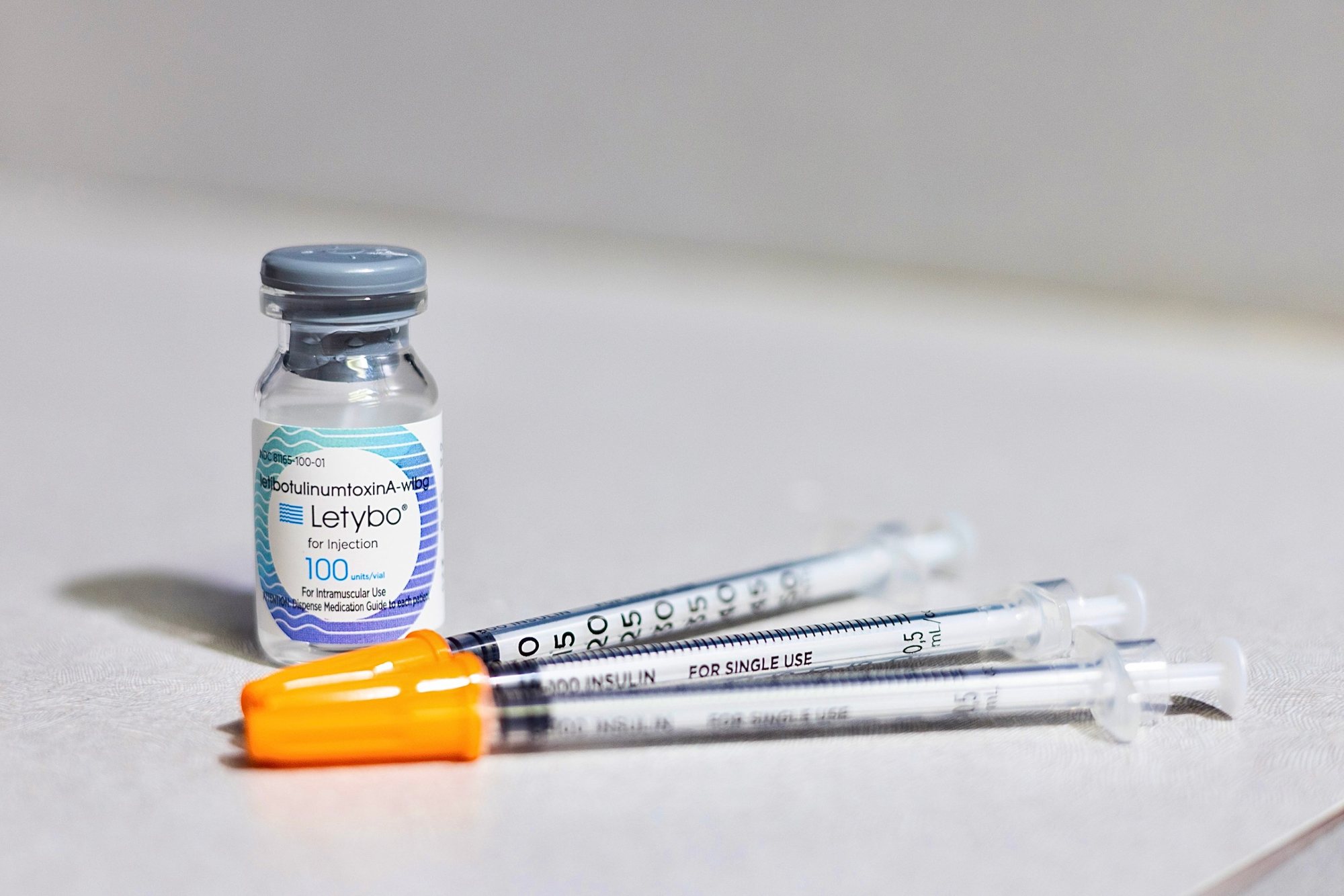
Botox is a brand name for a purified form of botulinum toxin type A, a prescription medication. It is not the only product of its kind. Other aesthetic neuromodulators available in the United States include Dysport, Xeomin, Jeuveau, and Daxxify. Each is a botulinum toxin type A product, but they differ in formulation, protein content, dosing units, and in some cases duration.
Because Botox was first to market in aesthetics, the brand name is often used generically, in the same way people say tissue when they mean facial tissue. In a medical setting the distinction matters, because these products are not interchangeable.
Where Does Botulinum Toxin Come From?
Botulinum toxin is produced by the bacterium Clostridium botulinum. In its natural form, in large quantities, it causes botulism. The medications used in medicine and aesthetics are purified, standardized, and administered in extremely small, controlled doses into specific muscles.
This origin sometimes alarms patients. It is worth remembering that many established medications derive from natural toxins. What determines safety is dose, purity, and the precision with which the medication is delivered.
How Do Neurotoxins Actually Work?
Muscles contract when nerves release a signaling chemical called acetylcholine at the junction between nerve and muscle. Botulinum toxin interferes with the release of that chemical. The nerve is not damaged and the muscle is not paralyzed permanently. Signaling is temporarily reduced.
As a result, the treated muscle contracts less forcefully. The skin overlying that muscle folds less, and the lines created by that folding soften. Over time the body restores normal signaling, which is why the effect wears off and treatment is repeated.
Why Do Expression Lines Form in the First Place?
Every time you frown, squint, smile, or raise your eyebrows, the skin folds along predictable lines. Early in life the skin springs back completely. With repeated folding across decades, and with age-related changes in collagen and elastin, those folds begin to leave a mark that persists even when the face is at rest.
This is why two people of the same age can have very different lines. Facial expressiveness, sun exposure, genetics, smoking, and skin thickness all contribute.
Dynamic Lines vs. Static Lines
A dynamic line appears when a muscle contracts and disappears when it relaxes. A static line is visible even when the face is still. The distinction matters a great deal when predicting results.
Neurotoxins work directly on dynamic lines, because they reduce the muscle activity that creates them. Static lines may soften over months as the skin is given a rest from repeated folding, but deeply etched static lines usually require additional approaches such as resurfacing, microneedling, or filler.
Common Treatment Areas
The most frequently treated areas are the glabella, which is the vertical frown lines between the eyebrows, the horizontal lines of the forehead, and the lines at the outer corners of the eyes commonly called crow’s feet.
Other areas are treated in selected patients. These may include the bunny lines on the nose, a downturned mouth corner, chin dimpling, a gummy smile, neck bands, and the masseter muscles along the jaw. Some of these uses are approved and some are considered off-label, which is common and accepted in medicine when supported by evidence and clinical judgment.
What About the Lower Face?
The lower face deserves particular caution. The muscles around the mouth are responsible for speech, eating, and drinking. Overtreatment can affect the ability to pronounce certain sounds, drink from a straw, or smile symmetrically.
When the lower face is treated, doses are generally small and placement is conservative. This is an area where experience matters more than product choice.
Will My Face Look Frozen?
Not if the treatment is planned properly. A frozen appearance usually results from treating too many muscles, using too high a dose, or failing to account for how muscles work together.
The goal in most patients is softening rather than elimination. A well-treated forehead still moves. The patient still looks surprised when they are surprised. What changes is the depth of the line, not the ability to express emotion.
Why Dosing Is Not One Size Fits All
Muscle strength varies considerably between individuals. Men often have greater muscle mass in the forehead and glabella and frequently require higher doses than women for a comparable effect. A patient with a strong, deeply furrowed frown needs a different plan from someone seeking early, preventive softening.
Too little product produces an underwhelming result and disappointment. Too much produces heaviness, a dropped brow, or asymmetry. Appropriate dosing is a clinical decision, not a menu item.
Units Are Not Interchangeable Between Brands
This point causes genuine confusion. A unit of one botulinum toxin product is not equivalent to a unit of another. The potency assays differ between manufacturers.
If you are quoted a price per unit, that number means nothing without knowing which product is being used. A lower price per unit may simply reflect a product that requires more units for the same effect. Ask which product is being used and what total dose is planned.
Onset: How Soon Will I See Results?
Most patients begin to notice softening within three to seven days. The effect typically continues to develop over the following week. For this reason, results are usually assessed at about two weeks, and any refinement is performed at that point rather than earlier.
If you have an event coming up, plan treatment at least two to three weeks in advance. This allows the effect to settle and leaves room for adjustment if needed.
How Long Does It Last?
Many conventional treatments last in the range of three to four months, although this varies with the product used, the dose administered, the muscle treated, and individual metabolism. Some patients consistently report shorter duration, others longer.
Newer formulations have been developed with the aim of extending duration. Whether a longer-lasting product is the right choice depends on how predictable you want the result to be, since a result you dislike also lasts longer.
Does It Stop Working Over Time?
Most patients continue to respond well for years. A small number develop reduced response, and in rare cases this reflects neutralizing antibodies to the product. Very frequent treatment at high doses may increase that risk, which is one reason unnecessarily aggressive dosing schedules are discouraged.
More commonly, a perceived loss of effect reflects a change in dose, a change in injector technique, or a shift in the patient’s expectations rather than true resistance.
Can Treatment Prevent Wrinkles?
There is a reasonable rationale for treating earlier. If a muscle folds the skin less often, the skin has less opportunity to form a permanent crease. Many patients in their late twenties and thirties pursue treatment for this reason, often at lower doses.
This is not a guarantee, and it is not necessary for everyone. Sun protection, not smoking, and good skin care remain the foundation of prevention. Neurotoxin is an addition, not a substitute.
What the Treatment Feels Like
The injections are performed with a very fine needle. Most patients describe a brief sting or pinch at each site. A typical glabella and forehead treatment takes only a few minutes.
No anesthesia is usually required for facial aesthetic treatment. Ice or a topical anesthetic can be used for patients who are particularly sensitive.
What to Expect Afterward
Small raised bumps at the injection sites settle within fifteen to thirty minutes. Mild redness is common. Bruising occurs in some patients, more often around the eyes, and generally resolves within several days.
Most people return to normal activity immediately. Common advice is to avoid rubbing or massaging the treated area for the rest of the day and to stay upright for several hours, although the evidence behind some of these instructions is limited.
Possible Side Effects
The most frequent side effects are mild and temporary: bruising, redness, swelling at the injection site, and headache.
Less commonly, the product can affect a muscle that was not the intended target. This can cause a drooping eyelid, an unevenly raised brow, or asymmetry. These effects are temporary but can persist for weeks. Rare but serious effects associated with botulinum toxin products include difficulty swallowing or breathing related to spread of the toxin beyond the injection site, which is why these are prescription medications requiring medical administration.
Who Should Not Be Treated?
Treatment is generally avoided in people with certain neuromuscular conditions such as myasthenia gravis, Lambert-Eaton syndrome, and amyotrophic lateral sclerosis, in the presence of active infection at the injection site, and in patients with known hypersensitivity to the product or its components.
Treatment is also generally deferred during pregnancy and breastfeeding. Certain medications, including some antibiotics, can potentiate neuromuscular effects and should be disclosed.
Why Anatomy Matters More Than Technique
The muscles of the face do not act in isolation. The frontalis muscle raises the brow. The muscles of the glabella and the orbicularis oculi pull it down. Treating one group without accounting for the others changes brow position in ways patients may not expect.
A classic example is treating the glabella and crow’s feet aggressively while leaving the forehead untouched, or the reverse: treating the forehead heavily in a patient who relies on it to hold a heavy brow, producing a sensation of weight or a hooded appearance.
Why Product Authenticity Matters
Counterfeit and improperly handled botulinum toxin products have been reported, and serious adverse events have followed their use. These products require specific storage and reconstitution and should be administered by a qualified medical professional in a medical setting.
If a price seems substantially below market, ask what product is being used, where it was sourced, and who is performing the injection.
What Neurotoxins Cannot Do
They do not restore lost facial volume. They do not lift significant loose skin. They do not remove sun spots, broken capillaries, or acne scars. They do not improve skin texture or tone.
A patient whose main concern is hollowing in the cheeks or heaviness along the jawline will not be satisfied by neurotoxin alone, no matter how skillfully it is placed. Recognizing this before treatment is what prevents disappointment.
How It Fits With Other Treatments
Neurotoxin is frequently combined with other approaches. Fillers address volume. Resurfacing and microneedling address texture and static lines. Energy-based devices address laxity and pigment. Skin care and sun protection support all of it.
Sequencing and spacing of these treatments should be planned rather than improvised, because some combinations are better separated by a period of healing.
Questions Worth Asking Before Treatment
Ask which product will be used and why. Ask how many units are planned and what that dose is intended to achieve. Ask who will perform the injection and what their training is. Ask what the plan is if the result is uneven at two weeks.
A clinic that welcomes these questions is a clinic that has thought about the answers.
Is There a Best Age to Start?
There is no universal age. The more useful question is whether a line is still dynamic or has already become static. A patient of thirty with a deep resting frown line may benefit more than a patient of fifty whose lines appear only with expression.
Decisions should be based on what the face is actually doing, how much the lines bother you, and whether you are prepared to maintain the result. Treatment that is started and then abandoned simply returns the face to its previous trajectory.
Why Your Result May Differ From a Friend’s
Patients often arrive with a photograph or a dose that worked for someone they know. Muscle strength, skin thickness, brow position, facial proportions, and the depth of existing lines all differ between individuals.
The same number of units placed in two different faces can produce very different outcomes. A plan should be built around your anatomy rather than someone else’s result.
The Two-Week Check
A review appointment at around two weeks is genuinely useful, particularly for new patients. It allows assessment of how your muscles responded, identification of any asymmetry, and small refinements where needed.
It also builds a record. Knowing exactly what was used and where, and how you responded, makes the next treatment more precise.
A Natural Approach at Vita Nova
At Vita Nova Anti-Aging and Rejuvenation Center in San Antonio, the goal is not to erase every expression. It is to soften the lines that bother you while preserving the features that make you recognizable. That begins with an evaluation of your facial anatomy, your muscle strength, your brow position, and what you actually want to change.
Conservative, well-placed treatment ages better than aggressive treatment. The best outcome is one where people notice that you look rested, not that you have had something done.
References
- Carruthers JD, Carruthers JA. Treatment of Glabellar Frown Lines With C. botulinum-A Exotoxin. J Dermatol Surg Oncol. 1992;18:17-21.
- Small R. Botulinum Toxin Injection for Facial Wrinkles. Am Fam Physician. 2014;90:168-175.
- U.S. Food and Drug Administration. Prescribing information for FDA-approved botulinum toxin products.
- Nigam PK, Nigam A. Botulinum Toxin. Indian J Dermatol. 2010;55:8-14.
Medical disclaimer: This article is for general education and is not individualized medical advice. Diagnosis, testing, medications, and procedures require appropriate professional evaluation. Treatment benefits, risks, and suitability vary by individual.